
Self-Compacting Concrete (SCC)
Introduction to Self-Compacting Concrete
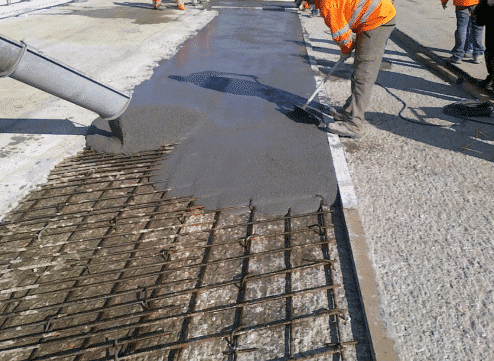
Self-compacting concrete (SCC) is a revolutionary material in the construction industry, defined by its unique ability to flow under its own weight, completely filling formwork without the need for mechanical consolidation. Born from a necessity to overcome the challenges of traditional concrete, SCC was first developed in the late 1980s in Japan. Since then, it has become a staple in complex projects where precision and consistency are paramount, allowing for easier placement in areas of dense reinforcement and complex geometry.
The Need for Self-Compacting Concrete
Traditional concrete, though reliable, often struggles with issues of workability, segregation, and the need for significant vibration during placement. These limitations have long burdened labor-intensive projects, particularly those involving intricate structural details. The rise in construction complexity, from towering skyscrapers to delicate precast elements, created a clear demand for an innovation like SCC—offering smoother, faster application with fewer defects and reduced manpower.


Composition of Self-Compacting Concrete
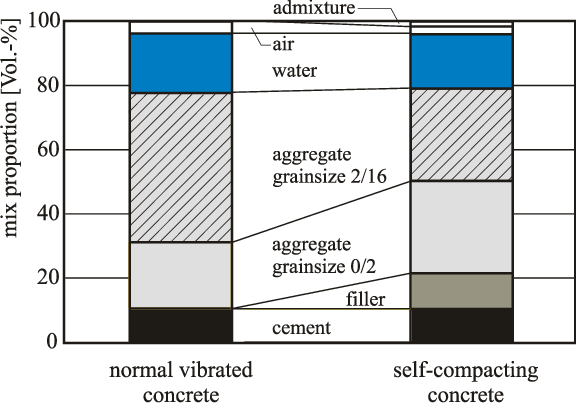
The composition of SCC distinguishes it from conventional concrete. It comprises similar basic ingredients such as cement, water, and aggregates, but with higher fine content and the incorporation of chemical admixtures. Superplasticizers are vital for enhancing fluidity without increasing water content, while viscosity-modifying agents (VMAs) ensure the mix remains stable, preventing segregation during placement. This delicate balance of components yields the flowable, yet cohesive properties for which SCC is renowned.
Properties of Self-Compacting Concrete
SCC is characterized by three primary properties: flowability, segregation resistance, and filling capacity. Its flowability allows the material to spread easily under minimal external force, adapting to complex formwork or heavily reinforced sections. Segregation resistance maintains homogeneity, preventing coarse aggregates from settling out of the mix. Additionally, SCC exhibits remarkable filling capacity, ensuring every corner of the mold is filled without voids or honeycombing.
Types of Self-Compacting Concrete
SCC comes in two principal variants. Powder-type SCC achieves its flowability through a higher powder content, typically achieved with additional cement or mineral additives such as fly ash. In contrast, viscosity-agent type SCC relies on chemical additives, primarily VMAs, to manage its flow characteristics and prevent bleeding or segregation. Each type offers flexibility depending on the project’s specific requirements.
Benefits of Using Self-Compacting Concrete
The advantages of SCC are multi-faceted. One of the most notable benefits is its ability to reduce labor costs, as it eliminates the need for vibrating equipment during placement. The material’s self-leveling nature also leads to an enhanced surface finish, minimizing the need for further touch-ups. By reducing the dependency on skilled labor for vibration and consolidation, SCC contributes to more efficient job site operations and faster project timelines.
Applications of Self-Compacting Concrete
SCC is particularly favored in high-rise building construction, where congested reinforcement presents a challenge to traditional concrete placement. Its ability to flow freely through tight spaces makes it ideal for complex formworks and intricate architectural designs. Furthermore, SCC has become indispensable in precast concrete production, where high-quality finishes and precision are essential. From bridges to skyscrapers, SCC plays a pivotal role in pushing the boundaries of what is possible in construction.
Production of Self-Compacting Concrete
Producing SCC requires a more meticulous approach compared to traditional concrete. Mixing techniques and equipment must be carefully managed to achieve the desired consistency and flow characteristics. Furthermore, rigorous quality control is essential to ensure the right balance of ingredients is maintained, as even slight variations can impact the performance of the final product. SCC production demands a careful orchestration of both art and science to achieve optimal results.
Challenges in Using Self-Compacting Concrete
While SCC offers numerous advantages, it is not without its challenges. The cost of materials, particularly the chemical admixtures required for SCC, can make it more expensive than traditional concrete. Additionally, in certain environments, such as those with high sulfate exposure or freeze-thaw cycles, SCC’s long-term durability has occasionally raised concerns. Compatibility with existing formworks, which may have been designed for traditional concrete, also presents practical challenges that must be overcome on a project-to-project basis.
Environmental Impact of SCC
SCC’s environmental benefits extend beyond its performance on-site. By eliminating the need for vibration, it significantly reduces noise pollution during construction—a critical consideration for urban projects. Additionally, SCC’s efficient use of materials, combined with its potential for incorporating recycled content such as fly ash or slag, makes it a more sustainable choice in concrete production. The reduction in defects and rework further minimizes waste and enhances sustainability.

Advancements in Self-Compacting Concrete Technology
The world of SCC continues to evolve, with ongoing innovations in chemical admixtures that improve both performance and cost-effectiveness. Additionally, new testing methods, such as non-destructive testing techniques, are emerging to ensure quality control in SCC production. These advancements are pushing the boundaries of what SCC can achieve, making it an increasingly viable option for a broader range of construction projects.
Testing and Quality Assurance of SCC
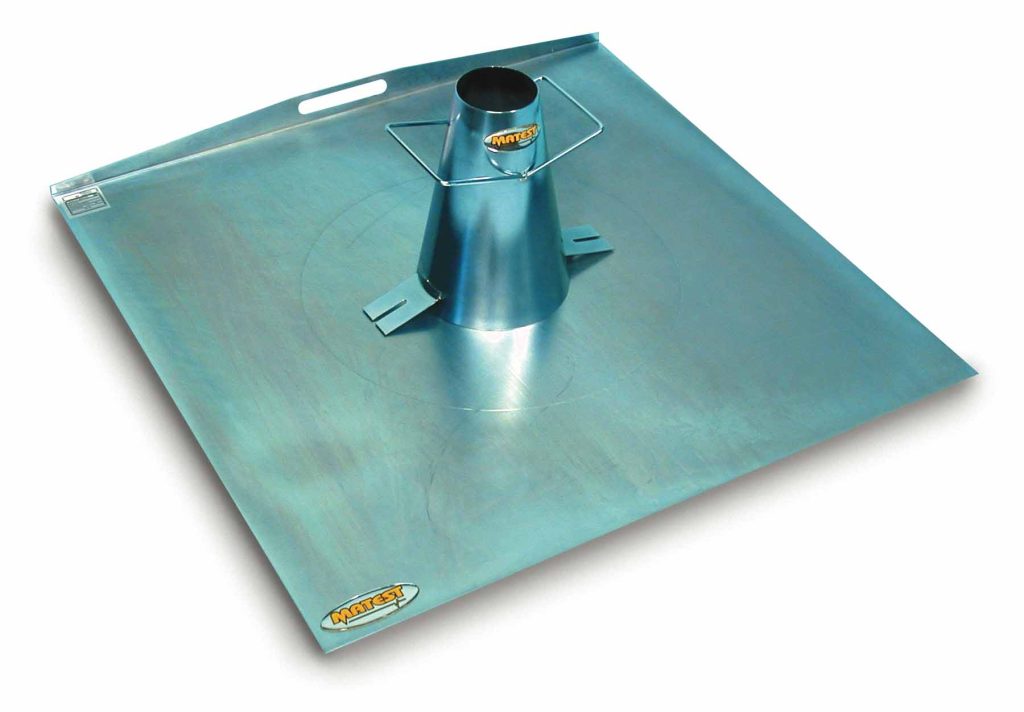
Ensuring the quality of SCC involves a series of specialized tests. The slump flow test measures the material’s flowability, while the L-box and U-box tests assess passing ability and filling capacity, respectively. These tests are crucial for maintaining the high standards of SCC, ensuring that it performs as expected in real-world applications. By rigorously testing SCC before use, project teams can mitigate risks and ensure the final product meets the required specifications.
Durability and Longevity of SCC Structures
SCC structures demonstrate excellent long-term performance, particularly in environments that place significant stress on materials. Its enhanced compactness reduces the permeability of harmful substances, improving durability in aggressive conditions, such as exposure to chlorides or chemical attack. Furthermore, the uniformity of SCC contributes to its longevity, ensuring that the structure retains its strength and stability over time.
Cost Analysis: SCC vs Traditional Concrete
Though the initial material costs of SCC are higher due to the use of admixtures, the overall cost savings in labor and time can make it more economical in the long run. SCC’s superior performance often leads to reduced maintenance and repair costs, making it a sound investment. When considering the total lifecycle costs of a project, SCC frequently proves to be a more cost-effective choice.
Future Trends in Self-Compacting Concrete
The future of SCC is bright, with emerging technologies poised to further enhance its capabilities. Nanotechnology is one area of interest, offering the potential to improve the material’s strength and durability at a molecular level. Additionally, as sustainability becomes an increasing priority in construction, SCC’s adaptability and performance characteristics will likely fuel its growth in the global market.
Case Studies: Successful SCC Projects
Many high-profile projects have successfully utilized SCC to achieve remarkable results. From complex bridges to iconic skyscrapers, SCC has played a pivotal role in overcoming construction challenges and delivering superior quality. These case studies illustrate both the versatility and reliability of SCC, offering valuable insights for future projects.
Comparing SCC to Other Advanced Concretes
SCC is just one of many advanced concrete types available today. In comparison to ultra-high performance concrete (UHPC), SCC offers superior flowability but may lack the extreme strength characteristics of UHPC. Similarly, fiber-reinforced concrete provides enhanced tensile strength but cannot match SCC’s ease of placement in congested forms. Each material offers unique advantages, and the choice depends on the specific requirements of the project.
Guidelines and Standards for SCC
Numerous international standards govern the use of SCC, ensuring that the material meets strict criteria for performance and safety. From European guidelines to American standards, these documents provide detailed instructions on everything from mix design to placement techniques. Adhering to these standards is critical to ensuring successful implementation of SCC on construction sites.
Common Myths About Self-Compacting Concrete
Several myths persist about SCC, particularly regarding its strength and complexity. Some believe that SCC is weaker than traditional concrete due to its flowability, but in reality, SCC can achieve comparable or even superior strength. Other misconceptions surround its cost and perceived difficulty in application—both of which can be mitigated through proper planning and execution.
Conclusion: The Future of Construction with SCC
As the construction industry continues to evolve, SCC stands out as a transformative material with the potential to redefine how projects are executed. Its blend of performance, efficiency, and sustainability makes it an ideal choice for modern construction, particularly as demands for more complex and environmentally conscious building solutions increase. SCC’s continued adoption will likely spur further innovation, paving the way for even more sophisticated applications in the future.

Leave a Reply